

Stroudsburg Commercial Restoration for Damage and Insurance Claims

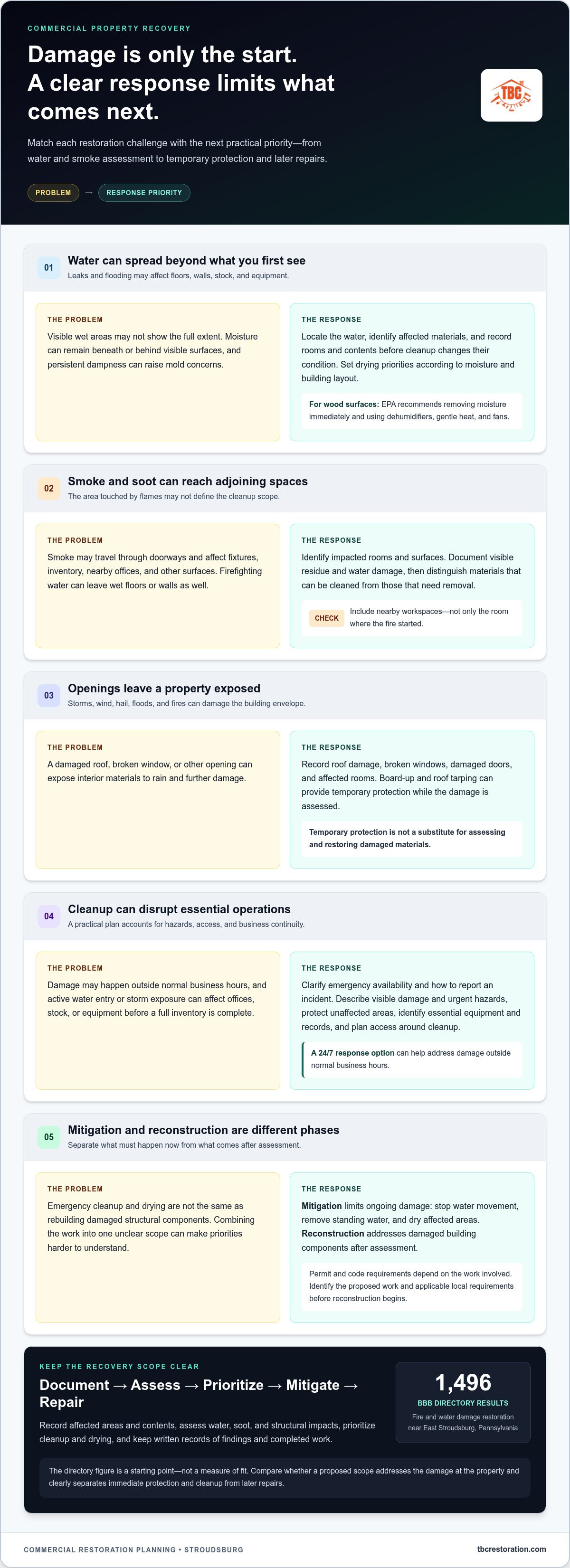
After a commercial fire, visible damage is only part of the recovery. Commercial property restoration services in Stroudsburg can address fire and smoke residue, water damage, mold concerns, and the steps needed to prepare an insurance claim, helping businesses work toward a safe return to operations. The right response depends on the type and extent of damage.
It’s understandable to focus first on reopening. But smoke and soot can affect areas beyond the visible damage, while water from firefighting efforts may create additional cleanup needs. A clear restoration plan helps business owners understand what needs attention and how cleanup and repairs can move forward.
This guide explains what emergency restoration can involve, how cleanup and mold remediation fit into recovery, and how to document damage for an insurance claim. It also covers commercial fire and smoke cleanup, an important part of restoring a workplace after a fire, so you can make informed decisions about the next steps.
Table of Contents
Emergency water, flood, fire, and smoke damage restoration
Commercial restoration can address water, flood, fire, smoke, storm, and structural damage. Businesses comparing commercial property restoration services in Stroudsburg should consider the damage types handled and the steps included in the response.
Water and Flood Recovery
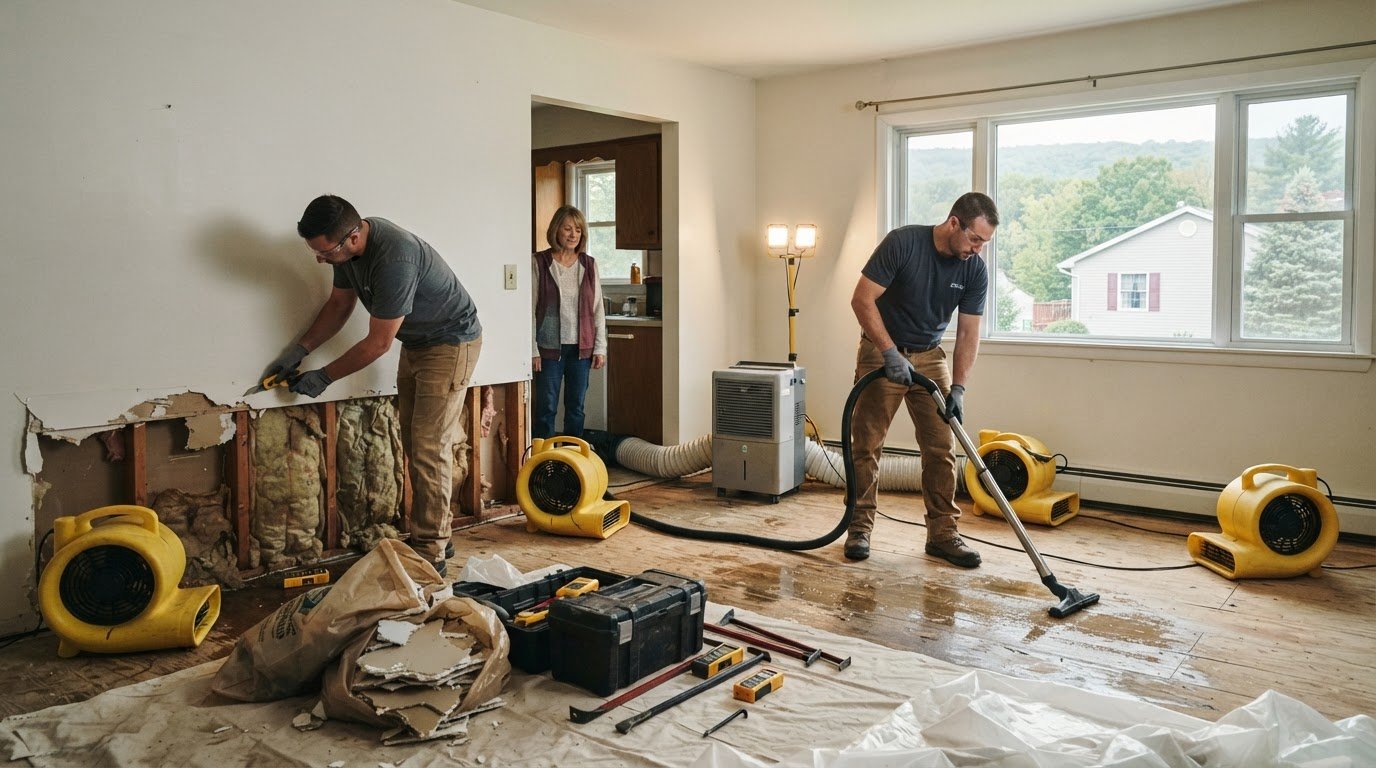
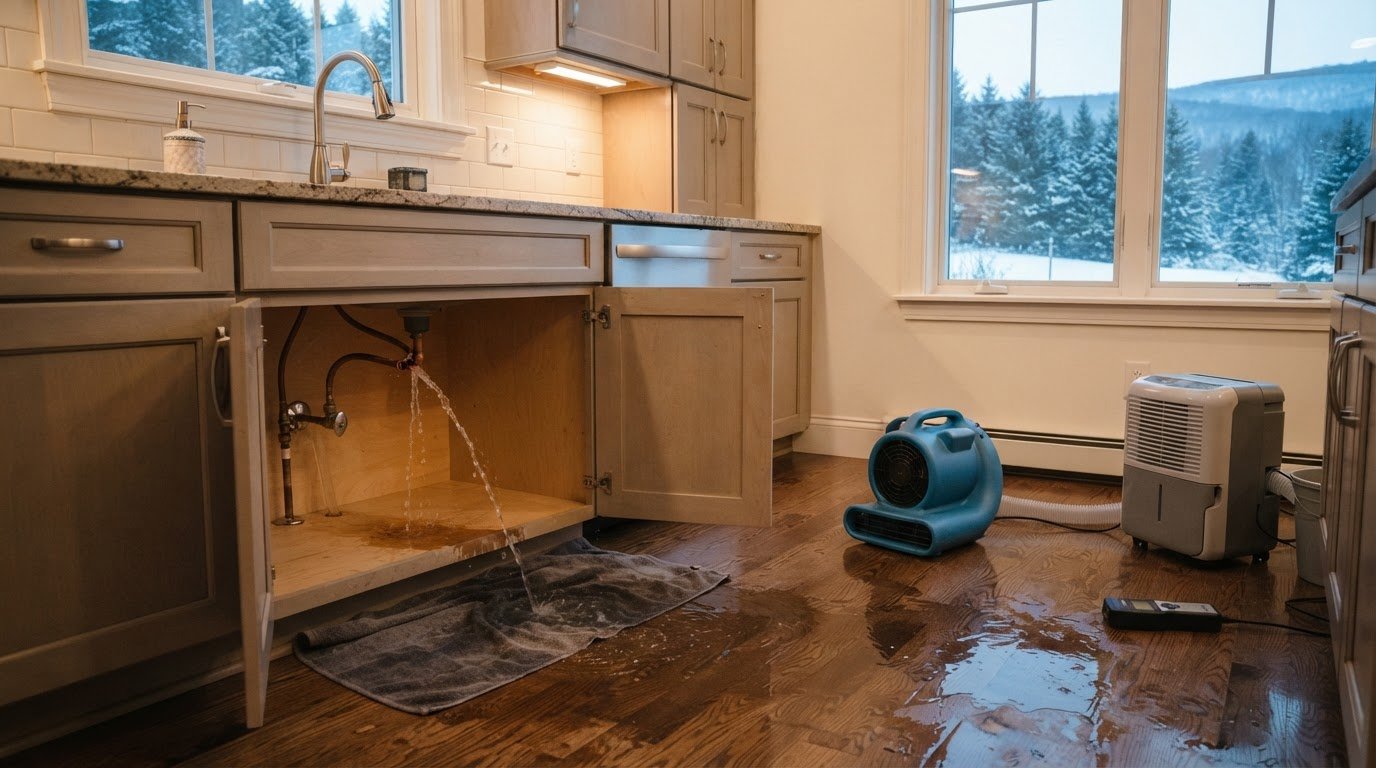
Commercial water and flood restoration begins by locating the water and identifying affected materials. A roof leak, burst pipe, or flood can wet flooring, walls, stock, and equipment. Record affected rooms and contents before cleanup changes their condition. The amount of moisture and the building layout help set drying priorities.
For wood surfaces, the U.S. Environmental Protection Agency recommends removing moisture immediately and using dehumidifiers, gentle heat, and fans. Check that the assessment considers damp materials beneath or behind visible surfaces. Water left in a commercial space can also raise mold concerns, so note any persistent moisture.
Fire and Smoke Restoration
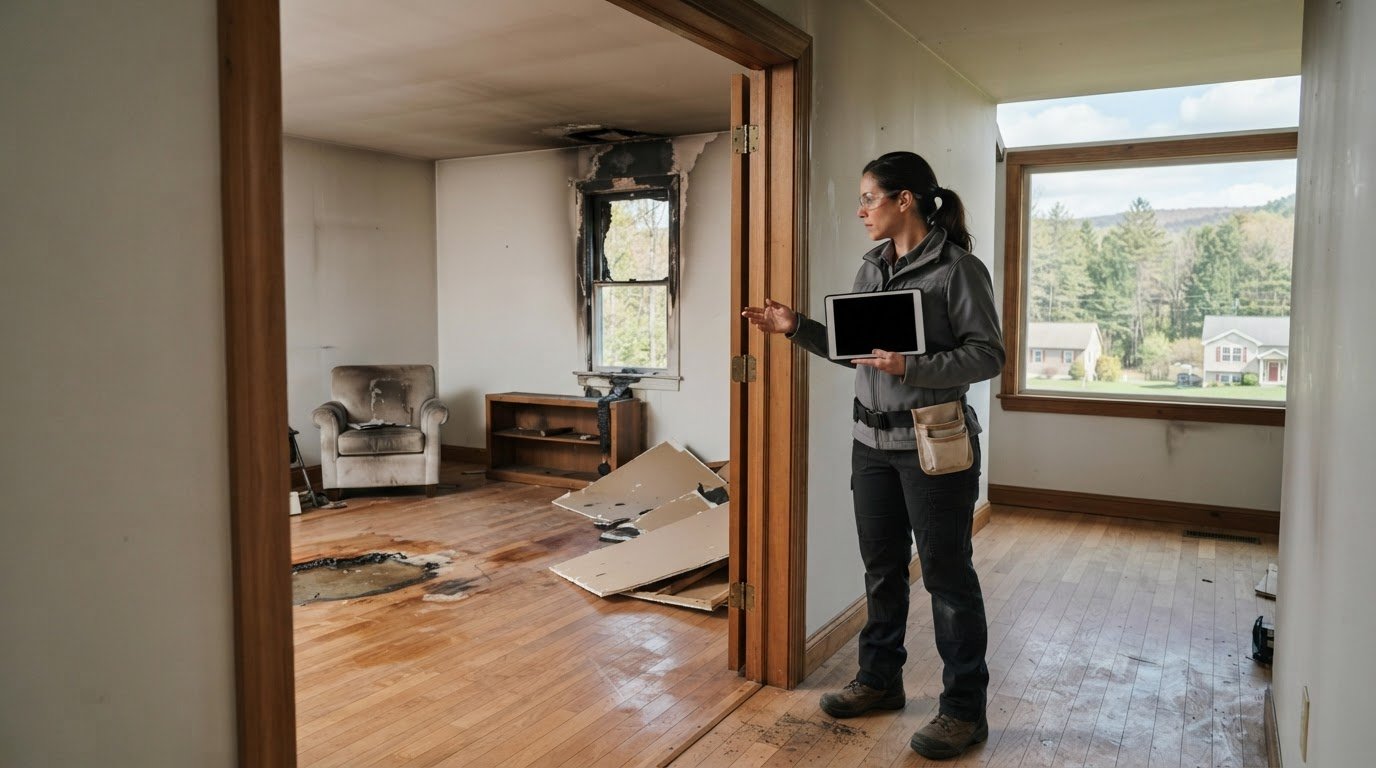
Fire and smoke restoration addresses soot and residue beyond the area touched by flames. Smoke can travel through doorways and affect fixtures, inventory, and adjoining offices. A cleanup plan should identify impacted rooms and surfaces, then distinguish what can be cleaned from materials that need removal. Firefighting water may also leave wet flooring or walls that require water cleanup.
For example, smoke from a small office fire may reach nearby workspaces. Document both visible residue and water damage to keep the restoration scope clear.
Structural Damage Restoration
Storms, wind, hail, floods, and fires can damage commercial properties. Hail or wind may damage a roof, exposing interior materials to rain. Record roof damage, openings, and affected rooms, then include them in the assessment. Restoration planning should distinguish emergency protection and cleanup from later work on damaged building components.
When comparing commercial property restoration services in Stroudsburg, consider whether the proposed scope covers both visible damage and its effects on connected spaces.
Permits and Restoration Steps
Permit and code requirements depend on the work involved. Cleanup and drying differ from rebuilding damaged structural components, so the project scope matters. For properties in Stroudsburg or Monroe County, identify the proposed work and applicable local requirements before reconstruction begins. Licensing, insurance, and IICRC certification are separate matters, so don’t assume one establishes the others.
After water or fire damage, document affected areas, assess water, soot, and structural impacts, then prioritize cleanup and drying. Keep written records of findings and completed work. When comparing contractors, consider customer reviews, response availability, and service range alongside how clearly each explains the restoration plan.
The BBB directory displays 1,496 fire and water damage restoration results near East Stroudsburg, Pennsylvania. That directory figure can serve as a starting point when identifying providers for an urgent commercial response, but the fit of a service should be checked against the specific conditions at the property. Compare whether the proposed work covers water, flood, fire, smoke, and structural impacts where relevant, and whether the assessment distinguishes immediate protection and cleanup from later repairs.
Emergency response and minimizing business downtime
Early mitigation can limit the spread of water, fire damage, or storm exposure through a commercial building. A practical response plan identifies urgent hazards, protects unaffected areas, and schedules cleanup around essential business operations.
Emergency Availability
Damage can occur outside normal business hours, so clarify how emergency availability works before an incident. A 24/7 response option can help address a burst pipe overnight or storm damage before the next workday. Confirm how to report the emergency, what information to provide, and which areas need immediate attention.
During severe weather in Monroe County, describe visible damage and any active water entry when arranging help. For example, note whether rain is entering through a roof opening and reaching offices, stock, or electrical equipment. This information helps prioritize the initial response without delaying it for a full damage inventory.
Emergency board-up and roof tarping can cover openings after wind, hail, or fire damage. These are temporary protective measures, not a substitute for assessing and restoring affected building materials. Record broken windows, damaged doors, and roof openings so the property team can track what has been secured.
Mitigation and Reconstruction
Mitigation limits ongoing damage; reconstruction addresses damaged building components later. After a pipe leak, for instance, initial priorities may include stopping water movement, removing standing water, and drying affected areas. Rebuilding follows an assessment of damaged materials and the restoration scope.
The sequence matters for business continuity. Separate unaffected rooms from work areas, identify essential equipment and records, and plan access around cleanup. The U.S. Environmental Protection Agency notes that professional help may be needed to dry an area quickly and thoroughly, depending on the affected area and available resources.
Severe weather can create several connected tasks: roof tarping, water removal, drying, and repairs to damaged interior materials. A clear work plan should distinguish emergency mitigation from commercial reconstruction. That helps managers understand what must happen first to restore the property and resume operations in usable areas.
For fire damage, response planning may also need to account for smoke-affected rooms and water used during firefighting. Keep an incident record with photographs, notes on affected rooms, and a timeline of observed changes. This helps the property team coordinate cleanup, temporary protection, and later repairs without overlooking damage outside the main impact area.
Insurance claims assistance
After a commercial disaster in Monroe County, clear records help connect property damage with restoration work. Insurance claim documentation can include affected areas, restoration details, and information shared among the business, restoration team, and insurer. The policy and documented damage shape claim decisions, so keep observations factual and preserve records from the start.
Begin with a dated incident record. Note when the damage was discovered, which areas were affected, and whether conditions changed. For example, after a roof leak, record water marks on ceilings, wet flooring, and damaged stock. Take photographs before cleanup changes the scene, then update the record as drying and repairs progress.
Keep claim materials together rather than scattering them across email threads and paper files. An organized record can include:
Photographs and written descriptions of affected rooms, materials, and contents.
Notes on the damage source, discovery time, and any immediate protective steps.
Restoration assessments, work summaries, and records of completed cleanup.
Insurer correspondence, claim references, and questions that still need answers.
Restoration and insurance coordination work best when the damage description stays consistent. If an office has fire damage and water from firefighting, document both conditions separately. The restoration scope should distinguish smoke-affected areas from water-damaged materials, so records show which work addresses each condition. Keep copies of revised scopes and note why the work changed.
Ask for restoration findings and the work plan in clear, written language. This makes it easier to compare documented damage with the insurer’s claim records. For example, if the assessment identifies moisture behind a wall, keep that finding alongside photographs and drying records. Don’t assume a verbal update replaces written documentation.
Commercial properties differ from homes in how damage affects daily operations. A wet storage area may affect inventory, while damage in reception can disrupt customer access. Record the practical impact, including which rooms are unavailable and what contents were affected, without treating operational disruption as proof of insurance coverage.
During coordination, keep communications focused on three items: the observed damage, the restoration work completed or planned, and supporting records. A restoration company may work with insurance companies as the building is restored toward its pre-loss condition or better. The claim decision remains tied to the policy and the evidence, so organized records help everyone discuss the same documented conditions.
Commercial mold assessment and remediation
After a leak or flood, mold assessment helps identify where moisture remains and what needs attention. In Monroe County, the affected materials, moisture source, and spread across rooms shape the assessment and remediation plan. A stain near a ceiling, for example, may indicate water entering above it, so tracing moisture matters alongside addressing visible growth.
Start by recording the location and appearance of suspected mold or mildew. Note nearby leaks, damp materials, musty odors, and previous water damage. Photographs and room-by-room notes provide a clear baseline for assessment. They also help distinguish a contained spot near a sink from a wider concern across an office wall or storage area.
Assessment can include a visual review, moisture checks, and mold testing when it helps answer a specific question. Testing may help characterize a concern, but results need context, including the sampled location and building conditions. Keep records of findings, testing performed, and assessor certifications. Certification alone doesn’t explain the assessment’s scope or what needs remediation.
Local and state laws may require specific inspection and documentation protocols, depending on the affected area. The size and location of the impact can influence which records and procedures apply. For a commercial property, document affected rooms and the assessment process. Clear records help property managers track the work and coordinate recovery.
Remediation should address the moisture source as well as affected materials. A practical sequence is to fix the leak, isolate the work area as needed, remove materials that cannot be cleaned, and clean remaining surfaces. Dry the area after cleanup, paying attention to nearby materials that may hold moisture. If mold appears on a wall after a pipe leak, treating only the surface won’t address the underlying water problem.
Prevention depends on controlling recurring moisture. After remediation, inspect repaired plumbing, roofs, windows, and areas around sinks or drains. Check for dampness after heavy rain or maintenance, and address leaks promptly. In a storage room, keeping materials away from a repeatedly damp wall can make inspections easier and help reveal new moisture sooner.
Mold and mildew mitigation works best when assessment, cleanup, and moisture control are addressed together. Use documented findings to define the affected area, record the work, and identify any remaining moisture concerns. A follow-up review can help determine whether the work addressed the identified conditions and whether another leak or damp area needs attention.
Commercial fire and smoke cleanup
Fire can leave smoke residue in rooms untouched by flames. Smoke may travel through doorways, corridors, and shared ventilation paths. A storefront fire, for example, can affect adjoining offices and merchandise. Cleanup should begin with a room-by-room assessment, not just the visibly burned area. Mapping affected spaces helps set priorities for cleaning, removal, and recovery.
A storefront or office can retain smoke odor after a fire if residue is not addressed. Odor and residue removal are important parts of commercial cleanup, not cosmetic afterthoughts. A restoration team assesses affected surfaces and contents, then selects cleaning methods suited to each material. A method that works for painted walls may not suit fabric furnishings or hard flooring.
Document visible damage before cleanup changes the scene. Photograph soot on walls, residue on counters, and smoke impact on stored items. Note which rooms were directly affected and which show signs of smoke movement. This record helps organize the work and communicate the damage. When practical, keep affected contents grouped by location so their condition remains clear.
Cleaning typically follows an orderly assessment of surfaces and materials. The process may involve removing loose residue, cleaning affected surfaces, and addressing odor sources. For example, a smoke-affected reception area may need attention to walls, desks, fixtures, and nearby textiles. Cleaning only the most visible soot can leave other affected surfaces untreated, so the scope should cover the impacted space.
Contents also need careful evaluation. Separate items with visible residue from unaffected stock and furnishings for assessment. Record each group and its location before handling or cleaning. This gives property managers a clearer picture of what was affected and helps prevent clean items from being mixed with smoke-exposed contents during recovery.
Firefighting water can create a separate cleanup need after the flames are controlled. Check adjacent rooms, flooring, and stored materials for water damage, and include those areas in the restoration record. A fire cleanup plan should account for both smoke and water damage where present. Otherwise, part of the incident may be left out of the documented work scope.
Before normal operations resume, review affected rooms against the initial assessment. Confirm that documented surfaces and contents received attention, and note any remaining odor or visible residue. This walkthrough gives managers a practical record of completed cleaning and outstanding work. Effective fire recovery considers smoke migration, residue removal, contents, and related water damage together.
TBC Restoration: Water Damage Restoration
TBC Restoration can help Stroudsburg businesses address water damage, mold concerns, and fire or smoke damage. Turn to its restoration services when an incident affects building materials, work areas, or business contents and cleanup is needed. Emergency Restoration Services are available 24/7, and Water Damage Restoration addresses damage from water intrusion. Mold Remediation and Testing can help assess and remediate mold concerns, while Fire / Smoke Damage Restoration focuses on fire-related damage and residue. Sharing which areas were affected and what happened helps clarify the restoration needs. Contact TBC Restoration to discuss recovery for your commercial property.
Plan Your Property’s Next Step
A property emergency can force quick decisions while staff, customers, and daily operations all need attention. Before an incident, identify who will document damage, coordinate building access, and protect essential business records. A simple internal plan helps your team act purposefully instead of making every decision under pressure.
When damage occurs, focus on the next practical step: explain what happened, identify affected areas, and outline what your business needs to resume work. That gives the restoration conversation a clear starting point. The right commercial property restoration services in Stroudsburg can address building damage while you focus on keeping your business moving.
If your commercial property needs restoration, contact TBC Restoration today to discuss the damage and recovery needs. A clear next step can make the path forward feel more manageable.
Frequently Asked Questions
Which commercial property restoration companies serve Stroudsburg, PA?
TBC Restoration serves Stroudsburg and nearby communities, including East Stroudsburg, Marshall’s Creek, Bushkill, Crescent, Mount Pocono, Bangor, Tannersville, Snydersville, and Saylorsburg. Its services address commercial property damage involving water, mold, fire, and smoke. When discussing restoration needs, share the property’s location and the type of damage so the response can be matched to the building and incident.
What commercial restoration services are available in Stroudsburg, including water, fire, mold, and storm damage?
Services include water damage restoration, mold remediation and testing, fire and smoke damage restoration, emergency restoration, and general cleaning. Storm-related water intrusion can require water extraction, drying, and cleanup. For example, after wind-driven rain enters a commercial space, identify affected rooms, contents, and materials. The restoration scope should reflect actual damage, since storms do not all create the same cleanup needs.
Do Stroudsburg restoration companies offer 24/7 emergency response, and how quickly can they arrive?
Yes, TBC Restoration offers 24/7 emergency restoration services. There isn’t a single arrival time that applies to every incident. The property’s location, access conditions, active weather, and the nature of the damage shape dispatch and travel. When reporting an emergency, provide the building address, a contact person, and a concise description of what happened so responders can understand the situation.
Does commercial property insurance cover restoration, and how do local contractors handle claims?
Commercial property insurance coverage depends on the policy’s terms, covered cause of loss, exclusions, limits, and deductible. A restoration company can document observed damage and provide work records to help organize claim information. Keep photographs, incident notes, and copies of restoration assessments together. The insurer evaluates coverage under the policy, so distinguish documented restoration work from a decision about what the policy will pay.
What health, safety, and business-interruption risks should owners consider during restoration?
Owners should account for wet floors, soot-covered surfaces, damaged materials, and work areas that staff or customers should not enter. Mark restricted spaces and communicate temporary access routes before reopening nearby areas. Restoration can also disrupt deliveries, inventory access, and customer service. For example, moving staff away from a damp storage room can keep people clear while the area is assessed and cleaned.
How do commercial restoration companies in Stroudsburg compare by reviews, response time, and service range?
Compare customer reviews, emergency response availability, and the range of damage handled. TBC Restoration advertises a 24/7 response team and services for fire, flood, storm, and structural damage, providing reliable commercial property restoration services Stroudsburg business owners trust.
Comments